Adult educators, facilitators, community leaders, and international guests gathered on the 12th of November at Tallinn’s Vabamu Museum of Occupations in Tallinn for ‘Building Peace Through Dialogue’.
Organised by the Estonian Dialogue Academy as part of the international Teach Peace project, the event explored how structured, empathetic conversation can help to create opportunities for people to discuss what is important to them, to bridge societal divides, and to foster resilience during periods of geopolitical and social tension.
Everyday Peace
During the opening, Bart Cosijn, founder of the Estonian Dialogue Academy, emphasised that peace building is neither abstract nor distant, but an immediate concern facing local families, workplaces, and communities across the Baltic and Nordic regions.
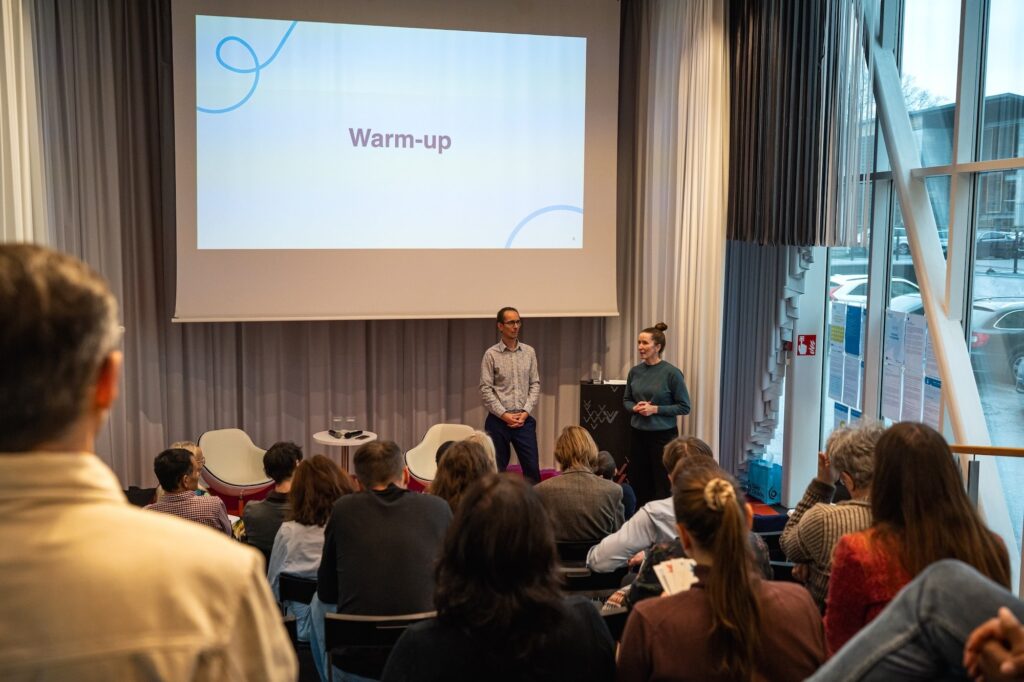
He also mentioned that “If you think about dialogue or peace, these are not easy concepts and we might have very different perspectives of what they mean. But what we will try to do is make it as concrete as possible, based on our shared stories and experience.”
Co-organiser, dialogue expert and adult educator Piret Jeedas introduced the theoretical framework guiding the work in the Teach Peace project. Citing UNESCO guidelines, Piret explained that peace education includes both “learning about peace and learning for peace.” Drawing on educational theorist Peter Senge, she described dialogue as an essential practice and inner discipline rather than a one-time skill.
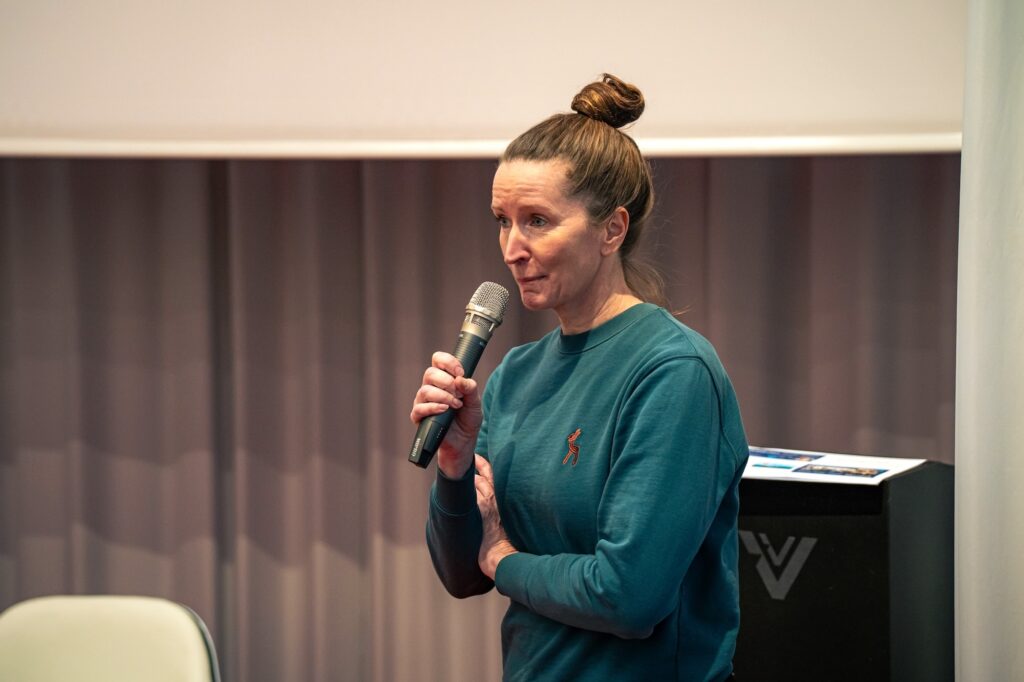
“Dialogue is both a set of skills and a mindset—an inner peace practice,” Piret reflected. “It is a lifetime discipline. Taking time to listen to each other before responding is something that, if cultivated broadly, could put our entire society in a very different position.”
Anna Sidorova
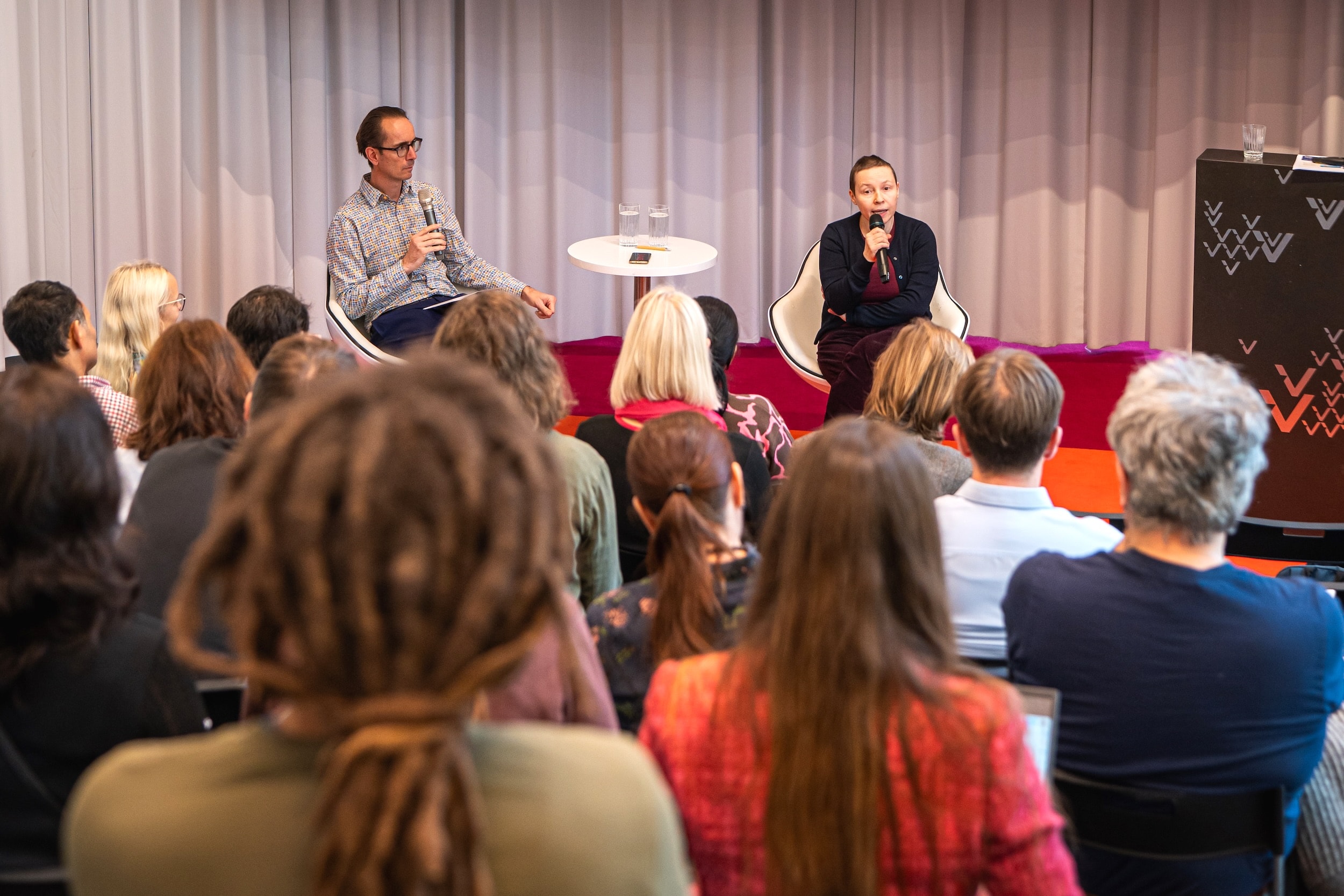
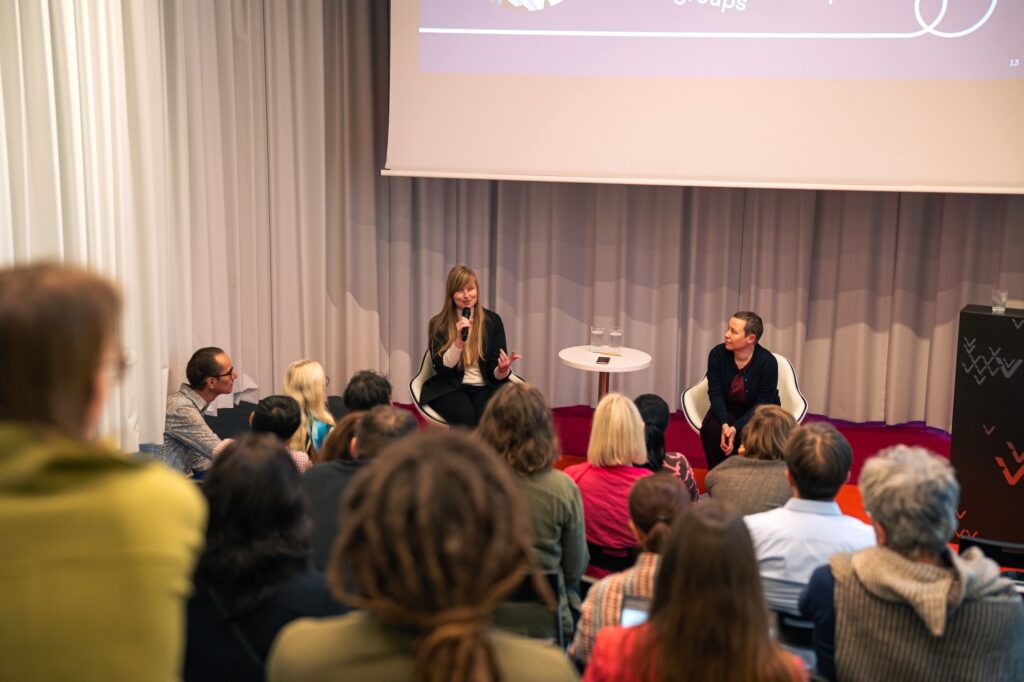
The main guest speaker of the event was Anna Sidorova from Finland. She is a dialogue practitioner and Senior Advisor on Cultural Diversity at the Finnish Arts and Culture Agency (Taike). She started of by sharing her journey as a dialogue practitioner within Finland’s Russian-speaking community—a diverse population of approximately 100,000 people encompassing varied waves of migration and heritage.
Sidorova recalled her initial encounter in 2015 with Finland’s National Dialogue Circles method. “I was invited to the presentation and I was very skeptical,” Sidorova said. “I really thought, could just talking in a circle actually work?”
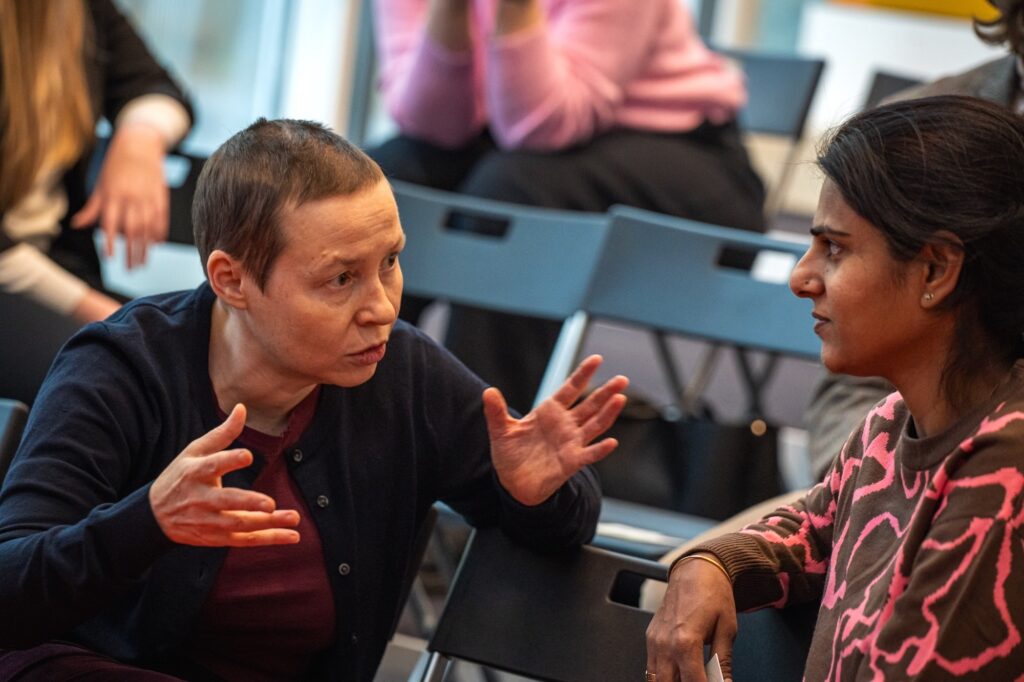
Her scepticism disappeared once she took her seat in a circle alongside museum directors, municipal workers, and local politicians. As a migrant living in Finland, the experience was important for her. “For the first time in Finland, I found myself in an equal discussion with these people,” Sidorova explained. “That feeling of being an equal participant, of bringing my thoughts as an equal—it felt like real integration. I immediately knew I wanted more people to experience this.”
War and dialogue
When Russia launched its full-scale invasion of Ukraine on February 24, 2022, the urgency of dialogue changed overnight. Sidorova described how she and her fellow trained facilitators immediately recognised that their community was in shock. On the same day as the invasion, they organised their first online dialogue circle via Zoom.
“We were shocked, but we wrote to each other and said, ‘Now the real crisis has started. Now we really need to be in dialogue with each other,’” Sidorova explained. “The main question in those early days wasn’t about geopolitical analysis; it was: Where are we, what is happening, and how do you feel? It was so important to share our feelings and process the shock together.”
What began as a single session evolved into bi-weekly and then weekly open dialogue circles that ran continuously for over a year. The circles welcomed Russian speakers living in Finland, recent arrivals, and eventually also other groups like people with a Belarusian background, Ukrainian refugees and even people from Estonia.
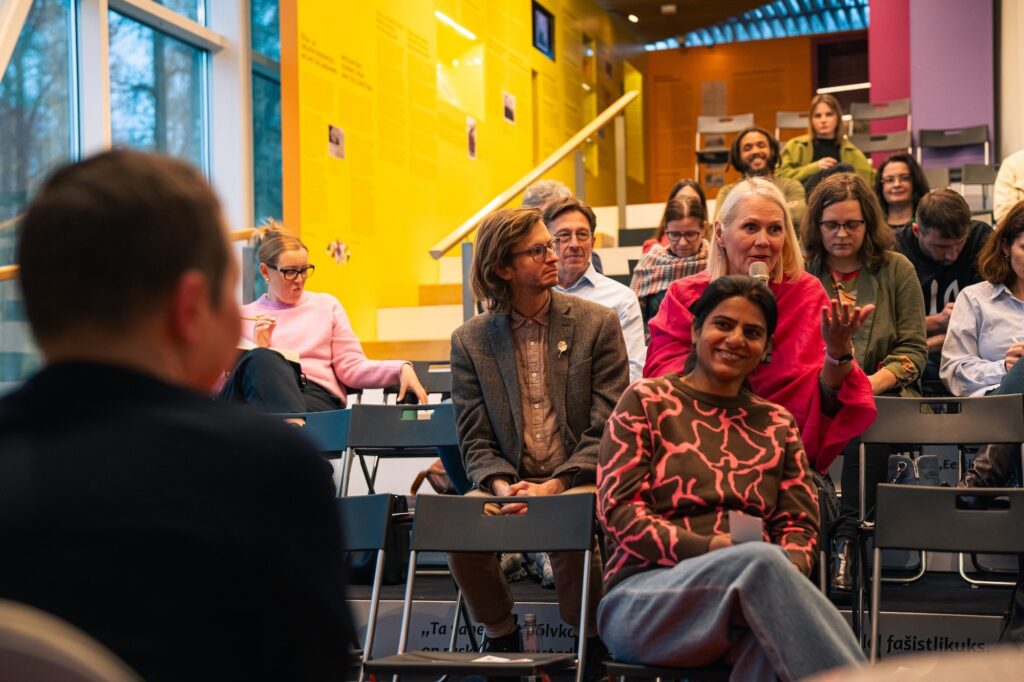
Rather than allowing sessions to become geopolitical debates, facilitators steered the circles towards mutual understanding and personal reflection. Sidorova noted that participants often wrestled with intense guilt, anxiety, and fears about the future.
“When you sit in a circle, you aren’t speaking one-on-one in a direct confrontation,” Sidorova mentioned. “You are placing your feelings and experiences into the middle of the circle. Together, we explore what lies behind feelings of guilt, fear, and confusion.”
Buffer spaces
The story of Anna Sidorova lead to many questions from participants attending the event. For example, a dialogue practitioner from Ukraine, raised a critical question regarding trauma sensitivity: “How did you deal with the issue of a trauma-sensitive approach when Ukrainian refugees joined the circles, considering they might have experienced severe traumatic events?”
Sidorova explained that facilitators created informal buffer spaces, opening every session half an hour early with coffee and tea to build trust before entering the dialogue room. “We trusted the circle,” Sidorova replied. “Participants were very sensitive to those who came from Ukraine. They gave them space, listened deeply, and wanted to offer support. We also made it clear that emotions were welcome, and participants were free to step out to the coffee room whenever they needed space.”
Dialogue principles
Another attendee asked how facilitators prevent dialogue from turning into a heated debate over who is right and who is wrong. Sidorova stressed the importance of establishing explicit ground rules at the outset and leaning on experienced co-facilitators.
“We set clear principles from the beginning: all opinions and feelings are valid, but we talk from personal experience,” Sidorova said. “When someone tried to lecture others or give unsolicited advice, the group itself gently nudged them back, reminding them that we were there to share personal experiences, not to teach others how to think.”
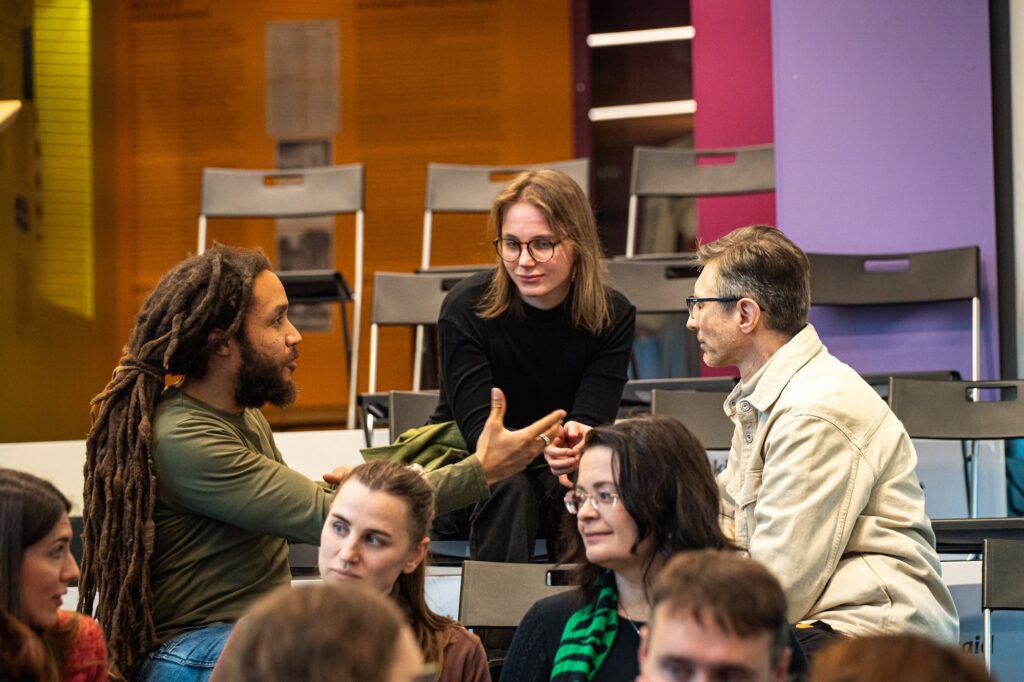
Regarding demographics, Sidorova shared that participants were approximately 60% women and 40% men, with attendees joining from Finland, Estonia, Ukraine, Belarus, Georgia, and Latvia. Beyond emotional relief, the circles inspired practical solidarity—leading to joint artistic projects, youth initiatives, a Ukrainian cultural festival, and lasting personal friendships.
An audience member from India offered a practical perspective on overcoming social hesitation in the Nordics and Baltics, noting that structured games or interactive activities—such as networking bingo—can help break the ice in societies where starting conversations with strangers does not always come naturally.
Diversity
Reflecting on Sidorova’s testimony, Anni Tetsmann, Adviser at the Estonian Ministry of Culture, confirmed the relevance of these methods for Estonia’s increasingly diverse society.
“Hearing Anna today confirms that we are on the right path,” Tetsmann stated, describing ongoing efforts by the Ministry and partner organisations to foster community integration in both urban centers and rural municipalities across Estonia. “Estonians are proud of our history, but our population is more diverse than ever. We must be open and ready to build community-based activities that bring people together.”
Teach Peace materials
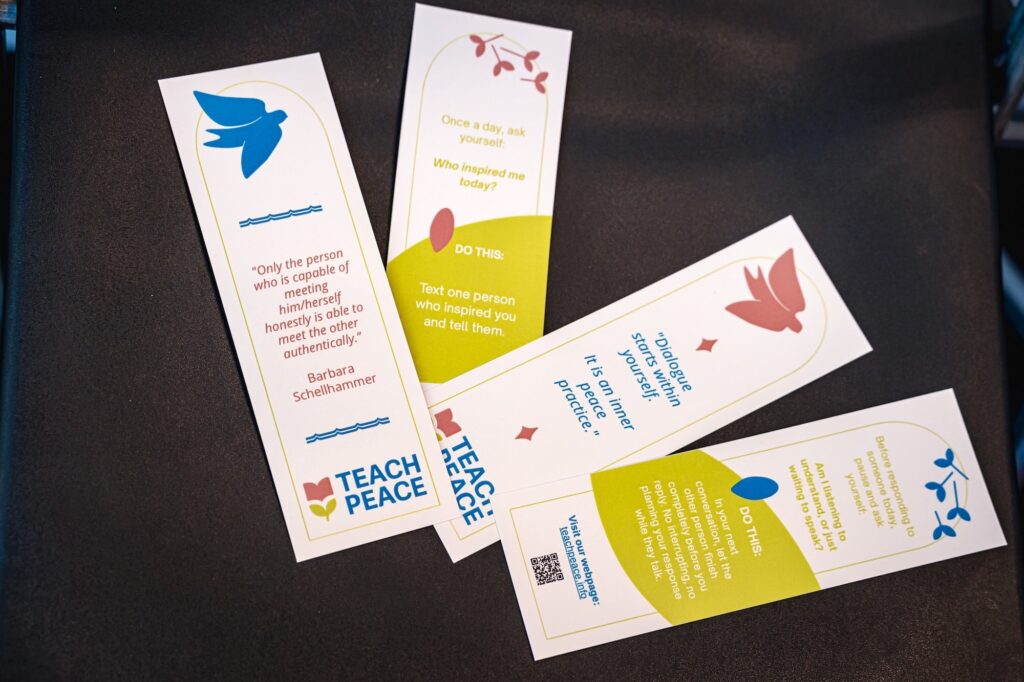
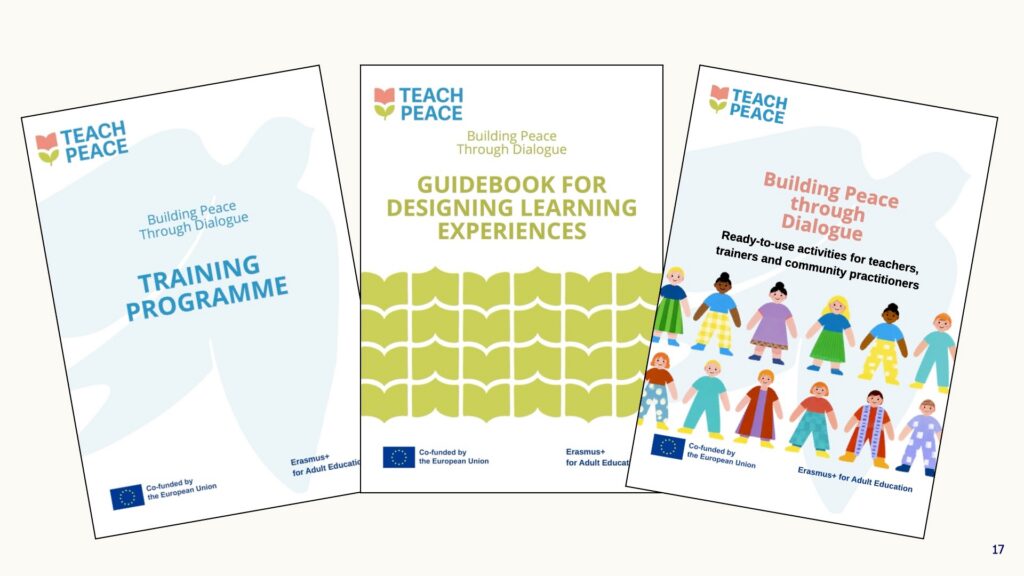
As the event drew to a close, organisers introduced the practical outputs of the Teach Peace project. Becoming available online in multiple languages—including English, Estonian, Finnish, German, and Ukrainian—the toolkit consists of:
- Modular Training Programme: Guidance spanning personal inner peace practices, communication skills, and post-dialogue community action.
- Adult Educator Guidebook: Insights on designing dialogical learning experiences and managing group dynamics.
- Ready-to-Use Activity Cards: Exercises like the “Hope Lens”, designed to guide groups in reflection, identifying sources of hope and constructive action.
The event concluded with a reflection from an audience member who challenged a public statement by UN Secretary-General António Guterres that “peace is hard.”
“Peace doesn’t have to be seen as an impossible, exhausting task,” the participant said. “True peace begins with inner peace and daily practice in how we relate to one another.”