Upcoming:
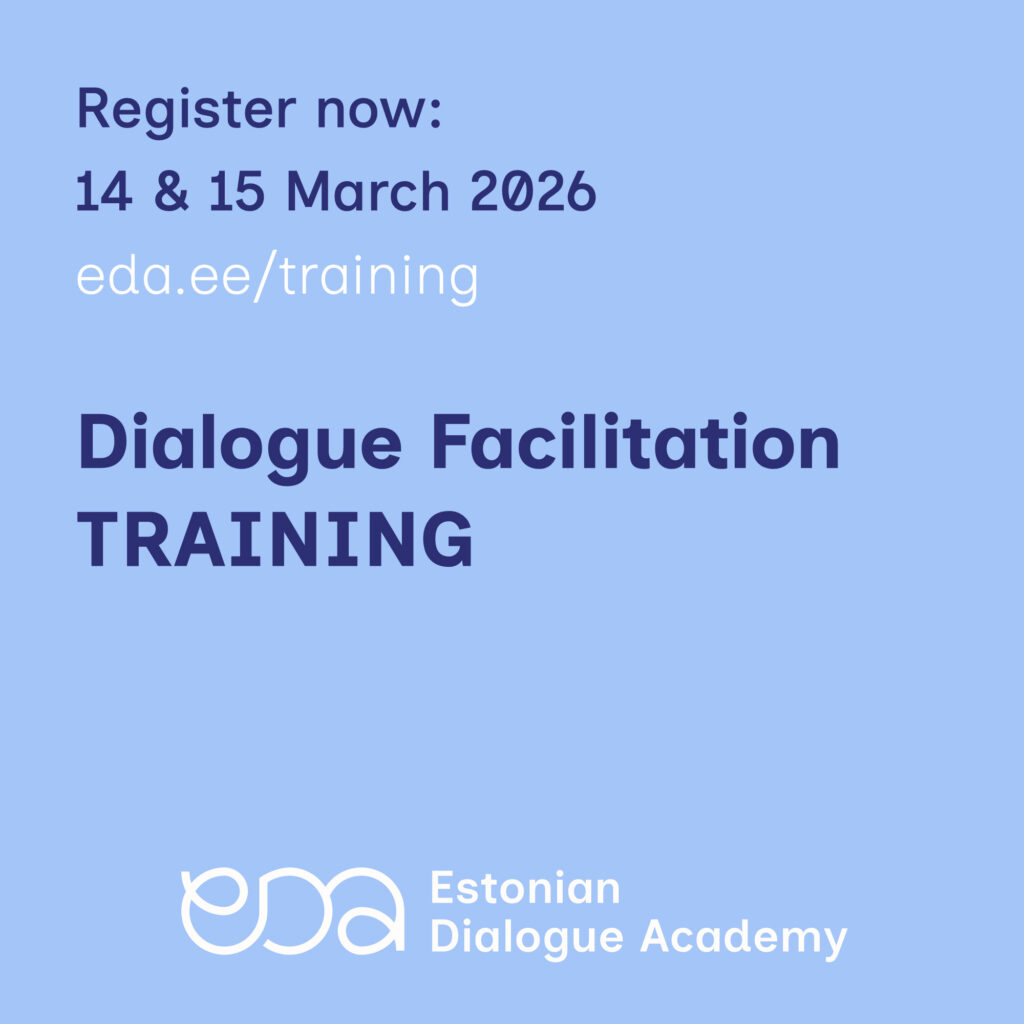
Dialogue Facilitation Training: The Basics
Saturday 14 & Sunday 15 March 2026 in Tallinn
Would you like to help people engage in dialogue? Do you want to learn how to facilitate a dialogue? Would you like to learn how to organise and lead a dialogue? Then we invite you to participate in this two-day training on facilitating dialogue.
During two days you will developing basic skills to organise and facilitate group dialogues. With these skills you can contribute to a more open and interactive culture of communication and participation. You will also help to build trust among people and within groups and organisations by creating an environment that encourages conversation.
Dialogue
Group dialogue is a conversation format that empowers people to discuss complex issues, without having to take standpoints. A dialogue is a form of collective and creative thinking about subjects or questions that concern all participants. Dialogues allow people to talk about these issues, both from a personal and from a conceptual perspective.
Training
This training covers the fundamentals of group dialogue, including how to structure and facilitate it. Dialogue is an excellent conversation format for exploring fundamental questions within teams and organisations.
Examples of such questions are: ‘What are our core values as a team?’, ‘How do we define effective collaboration?’, ‘What does success mean to us?’, and ‘What does it take to trust each other?’
As a facilitator, you boost the quality of a dialogue by creating a safe atmosphere, you support everyone to participate equally, and you keep the focus on the central question.
Focus of the training:
- Understanding the background and values of dialogue
- Preparing and choosing the appropriate form of dialogue
- Selecting and inviting people for dialogue
- Opening, facilitating and concluding a dialogue
- Strategies for reading and steering group dynamics
Included aspects:
- The benefits of dialogue for individuals, communities and organisations.
- Key differences between dialogue, discussion and debate.
- Different types of dialogue: small group, medium group & public dialogue.
- Ways to support everyone to speak and build a constructive conversation.
Output
1) You can implement these skills in your own work, your organisation and community. You will also be able to join future in depth trainings.
2) We are starting a pool of dialogue facilitators. This pool is there to help both with our own projects as with projects we run in collaboration with partners. After the training you can join this pool.
3) In spring 2026 we are helping to organise and run English language dialogue circles in Estonia, as part of the international Borderland Dialogues. After the training you can support this project, if you are interested. More info here.
Practicalities
- Dates: Saturday 14 & Sunday 15 March 2026
- Times: 9:30 – 12:30, 1 hour lunch break, 13:30 – 16:30
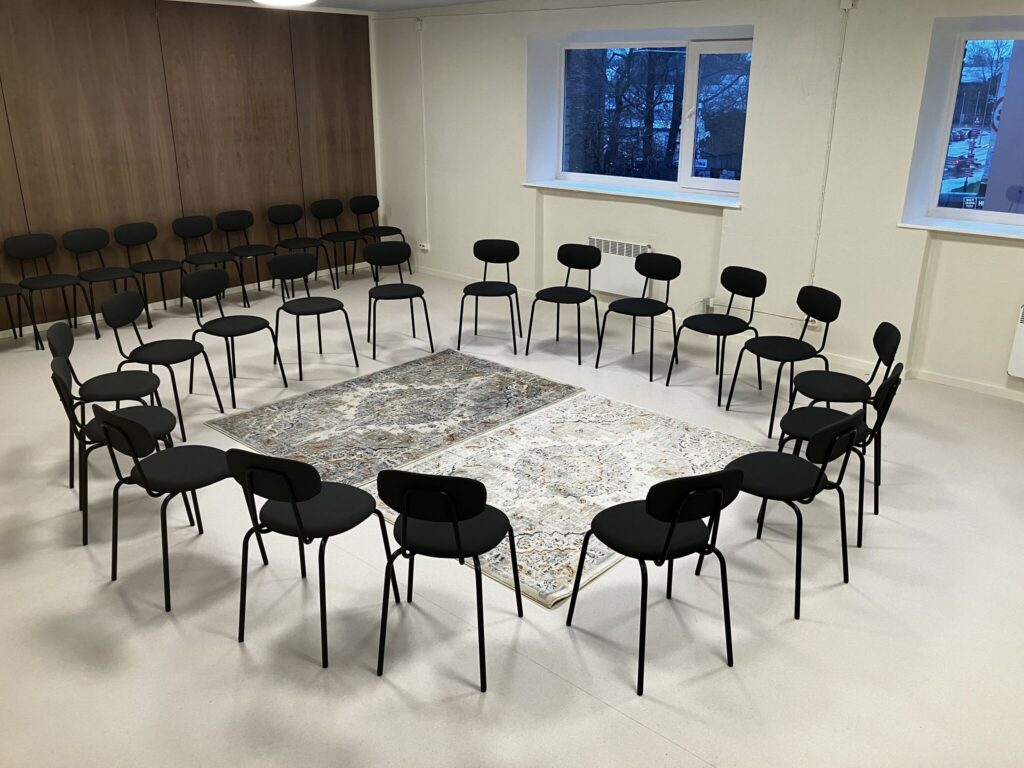
- Location: In our training room, Telliskivi 60a, Tallinn, 3th floor
- Working language: English
- Group size: minimum 7, maximum 12
- Registration deadline: Sunday 22 February
Fee
The fee consist of two parts: a start fee + a voluntary contribution. As you are invited to use your skills to contribute to our Erasmus+ projects afterwards, part of the costs for this specific training are covered by our Erasmus+ funding.
- The start fee covers the costs for space use, coffee, tea & snacks, and part of the time investment of the trainer. This is 75,00 € per person. (the lunch will be for your own costs)
- The voluntary contribution is defined by participants themselves before or after the training. With this contribution you support the work we do.
You will get an invoice for the start fee before the training. If you are able to give a voluntary contribution this will be combined with the same invoice, or put on a separate invoice afterwards, based on your preference. We don’t calculate VAT.
Trainer

Bart Cosijn is a trainer, teacher and facilitator. He is the founder and CEO of the Estonian Dialogue Academy. He has been training facilitation and moderation skills since 2011. He has given facilitation trainings for cultural institutes, universities, journalistic outlets and public organisations. As a trainer Bart worked in Europe, the US and Japan.
In 2019 he published the booklet ‘On the Art of Moderating’. He is a regular contributor to newspapers and magazines, writing about the importance of dialogue, empathic leadership, and deliberative democracy. Before moving to Estonia, Bart worked for 15 years in the Netherlands and abroad as a participation specialist, facilitator and moderator.