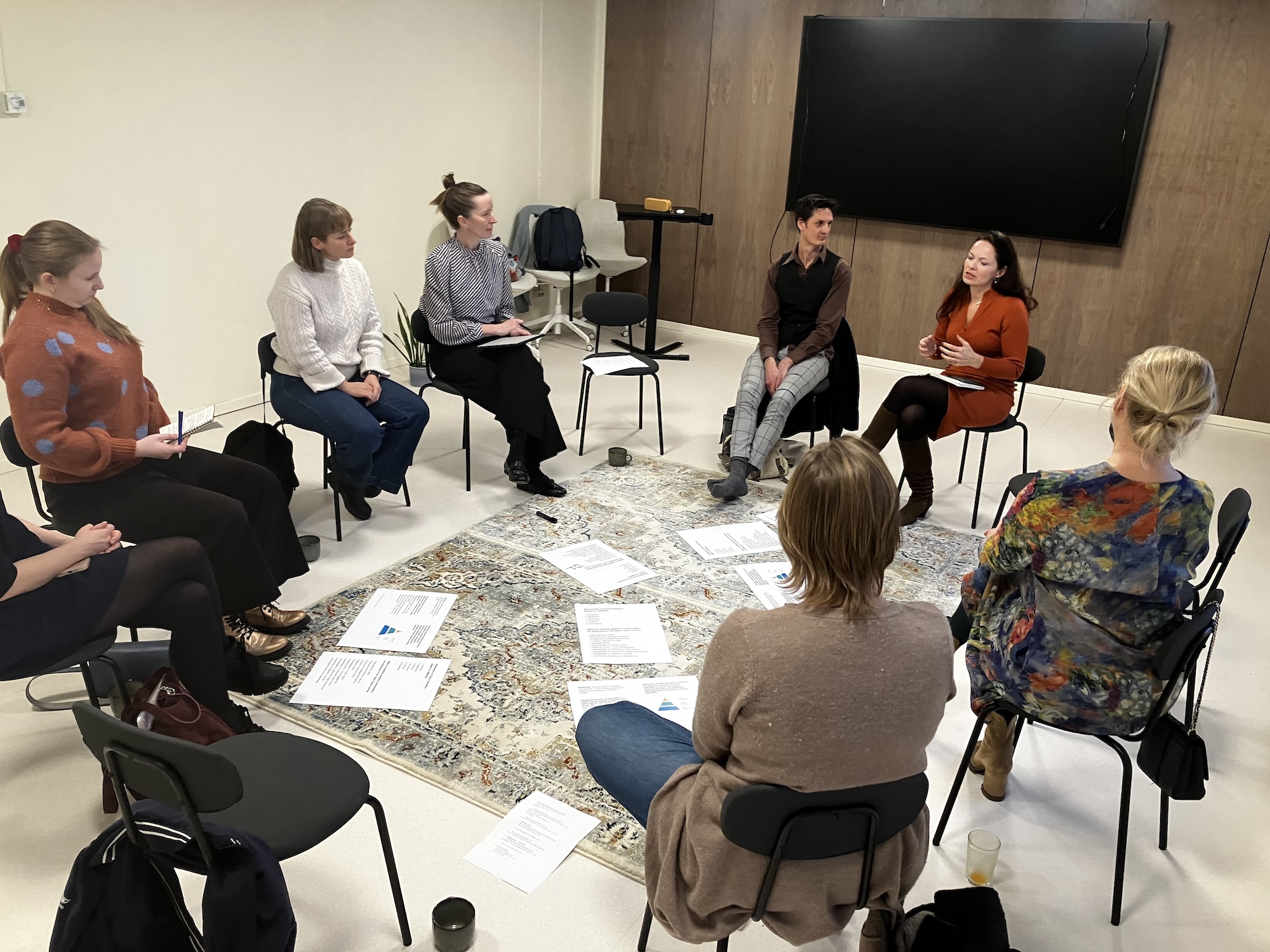
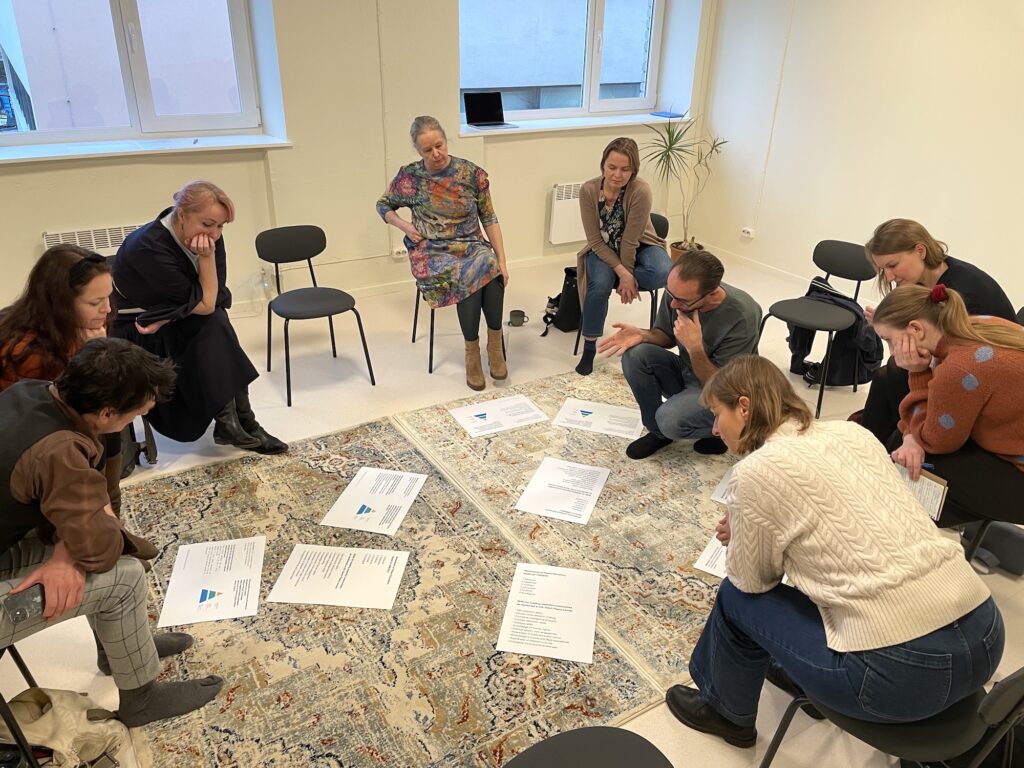
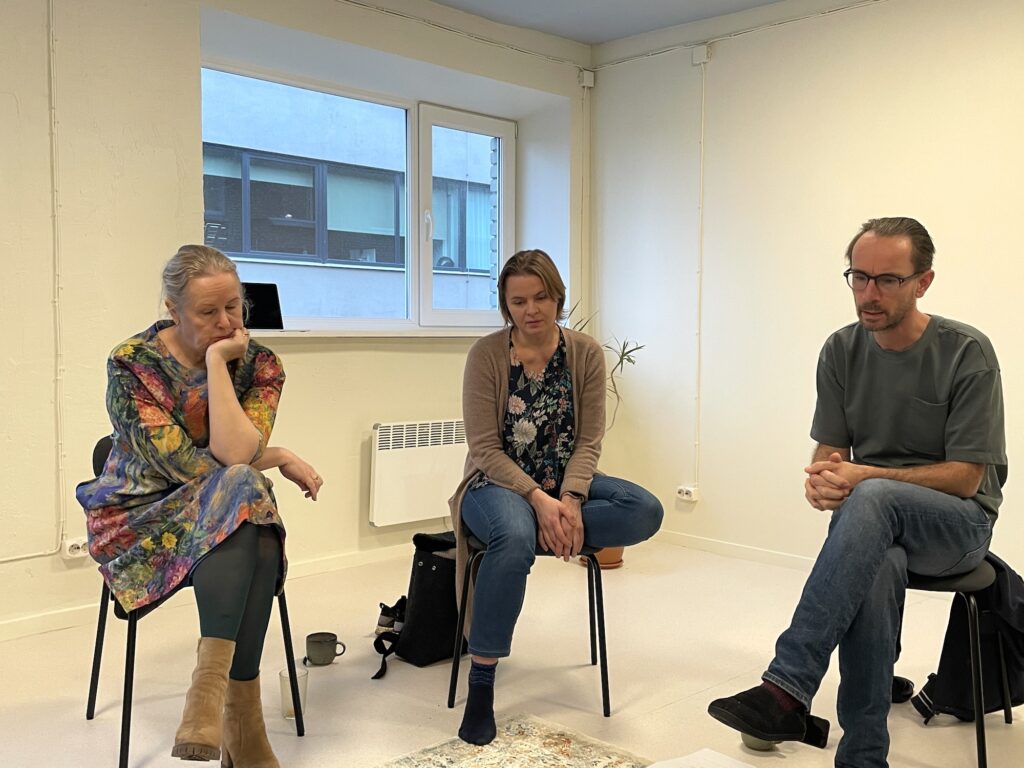
On 2 December 2025, a group of adult educators and peace education promoters met at the Estonian Dialogue Academy in Tallinn for a group dialogue as part of the Teach Peace project, which is developing an approach to peace education for adults. Since “peace education” can feel unfamiliar at first, the session offered a chance to explore what it means through conversation rather than definitions.
Eight participants from different organisations and fields in Estonia reflected on peace education as a way of understanding other people’s perspectives, practising peaceful and non-violent communication, and using dialogue as a form of “thinking together”.
Peace education to the idea of a compassionate future — living respectfully with others. Participants explored existing approaches, including Mondo’s online peace education for youth workers and UNESCO’s framework with six dimensions (personal, relational, political, structural, cultural, ecological) and a wide range of skills such as self-reflection, critical thinking, dialogue, deliberation, and citizenship education.
As the group went deeper, a key question emerged: from what “place” is peace education being developed today? In times marked by fragility and uncertainty, the discussion highlighted the relevance of self-supporting skills, psychological well-being, and the importance of critical thinking.
The dialogue sessions will continue in spring 2026 to explore what a meaningful peace education training for adults could look like.
The Teach Peace project is being implemented under the Erasmus+ program with the support of the European Union.